YouTube
Summarized
in One Click

Zloth adds a button into YouTube thumbnails to summarize any video in one click.

No copy/pasting links, no tab switching, no prompting.

How it works

1

Browse YouTube

Zloth adds a summarize button right on every thumbnail.

2

Click Summarize

Get an AI summary without ever opening the video.

3

Saved to Your Library

Every summary is kept and ready to organize in folders.

0:00 / 0:00

Summarize

Generate summaries the way you want

Use built-in prompts, save your own custom prompt or ask a quick question on the go.
💬 One Click Summary

Summarize from the Thumbnail

Hit summarize right from the YouTube thumbnail — no need to open the video.

📑 Built-in Prompts

Analysis prompt

Generates a comprehensive analysis of the video, focusing on the key learnings and insights. It extracts the most important takeaways you would gain from watching the full video.

Key features

  • Identifies the main insights and learnings
  • Structured, scannable bullet points
  • Focuses on educational value

Summary prompt

Creates a detailed summary with clickable timestamps, so you can jump to specific parts of the video. Perfect for longer content where you want to navigate to particular sections.

Key features
  • Clickable timestamps for each point
  • Comprehensive coverage of the video
  • Maintains chronological flow
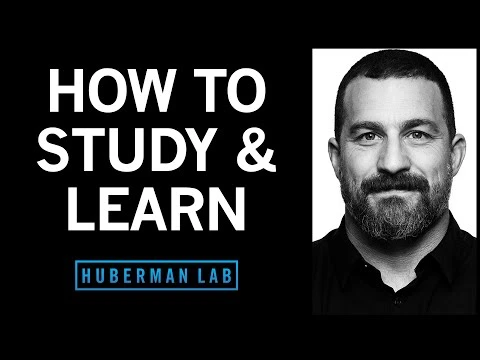
How to Study & Learn — Huberman Lab thumbnail

Optimal Protocols for Studying & Learning

Key Takeaways
  • Learning is best achieved by focusing on the process of offsetting forgetting through deliberate testing.
  • Foundational learning practices are not intuitive; many common beliefs about effective study methods are false.
  • Neuroplasticity, the brain's ability to change, is primarily driven by strengthening and weakening existing neural connections, not necessarily forming new neurons.
  • Sleep is critical for learning, as it facilitates the consolidation of memories and the refinement of neural pathways.
  • Effective learning requires both focus and alertness, which can be enhanced through practices like mindfulness meditation and adequate sleep.
  • Self-testing is a powerful learning tool that actively engages memory recall and identifies knowledge gaps.
  • Exposure to novel and engaging information, especially when accompanied by emotional significance, enhances memory encoding and retention.
  • Structuring learning sessions into shorter, focused blocks with breaks can improve concentration and reduce cognitive fatigue.
  • The best way to learn is to actively engage with the material, rather than passively consuming it through reading or listening alone.
  • Understanding the underlying mechanisms of learning, such as neuroplasticity and memory consolidation, can empower individuals to optimize their study strategies.
How to Study & Learn — Huberman Lab thumbnail

Optimal Protocols for Studying & Learning

Key Moments
  • 00:09 Andrew Huberman introduces the podcast, focusing on science and science-based tools for everyday life.
  • 00:15 The discussion will cover the best ways to study, remember, and effectively use new information.
  • 00:56 Learning and the best learning practices are not intuitive; much of what we believe is incorrect.
  • 01:52 The field of education, psychology, and neuroscience have converged to define optimal learning strategies.
  • 02:30 Introduction of the sponsor, Eight Sleep, highlighting their smart mattress cover with cooling, heating, and sleep tracking capabilities.
  • 02:44 A key factor for good sleep is the body temperature dropping by 1-3 degrees Celsius.
  • 03:01 Eight Sleep's pod cover helps control sleep temperature and tracks sleep stages.
  • 04:03 Introduction of the sponsor, BetterHelp, an online therapy platform.
  • 04:23 Regular therapy is considered as important as regular exercise for overall health.
  • 05:12 Introduction of the sponsor, Waking Up, a meditation app with various programs.
  • 05:22 Meditation can positively impact focus, stress management, and mood.
  • 07:04 Research indicates that preferred learning styles are not a strong predictor of learning success.
  • 07:11 The best way to study and learn is to focus on memory systems that offset forgetting.
  • 08:43 Neuroplasticity refers to the brain's ability to change in response to experience.
  • 09:08 Neuroplasticity involves strengthening, weakening, and forming new neural connections.
  • 10:09 Neurogenesis (creation of new neurons) plays a minimal role in learning compared to connection modification.
  • 11:12 The key to better learning is offsetting the natural process of forgetting.
  • 11:30 Testing oneself, even with errors, is more effective for learning and retention than simply rereading material.
  • 13:35 The best learning practices are not intuitive and often involve active engagement and deliberate practice.
  • 13:54 The optimal learning strategies identified include setting aside dedicated time, minimizing distractions, and consistent study sessions.
  • 15:15 Another crucial tool for learning is teaching others, which reinforces understanding and retention.
  • 17:19 The emotional context of learning significantly impacts memory encoding and recall.
  • 18:08 Good sleep is fundamental for optimal cognitive function, including focus and learning.
  • 18:40 Practicing mindfulness meditation, even for short periods, can improve focus and learning capabilities.
  • 19:10 Self-testing, particularly with spaced repetition and retrieval practice, is a powerful learning tool.
  • 20:30 The concept of "desirable difficulties" suggests that learning challenges, like self-testing, enhance long-term retention.
  • 21:11 Motivation, especially long-term motivation tied to future goals, plays a crucial role in sustained learning efforts.
  • 22:13 Interleaving different subjects or skills during study sessions can improve learning outcomes.
  • 23:11 The importance of attention and focus in learning cannot be overstated.
  • 24:40 Understanding the neural mechanisms underlying learning, such as neuroplasticity, provides a foundation for effective learning strategies.
  • 26:46 Sleep is paramount for memory consolidation and overall learning ability.
  • 30:04 The study of learning habits indicates that successful students actively schedule study time, minimize distractions, and study alone.
  • 33:10 Learning is not passive; it requires active engagement and deliberate effort.
  • 34:14 The effectiveness of learning strategies is enhanced by emotional engagement with the material.
  • 36:15 Good sleep hygiene is essential for optimal brain function and memory consolidation.
  • 37:17 Self-testing (retrieval practice) is a powerful tool for enhancing long-term learning and retention.
  • 38:40 Understanding the neural basis of learning (neuroplasticity) is key to optimizing study strategies.
  • 43:10 The best learning occurs when learners are actively engaged and focused on the material.
  • 44:13 The three key learning strategies identified are: focused attention, active recall (testing), and spaced learning.
  • 47:03 Learning through errors and subsequent correction is an effective method for strengthening neural pathways.
  • 50:10 The research strongly supports the effectiveness of self-testing as a learning strategy.
  • 52:10 Understanding the brain's mechanisms for encoding and consolidating information is critical for improving learning.
  • 54:11 The act of testing oneself, even when incorrect, aids in memory retrieval and learning.
  • 57:17 Long-term learning and memory are significantly impacted by emotional state and motivation.
  • 59:18 Deliberate practice, which involves focused effort and challenge, leads to greater mastery than passive review.
  • 1:01:10 Interleaving different subjects and retrieval practice are more effective learning strategies than massed practice.
  • 1:04:10 Sleep is critical for memory consolidation and optimal learning.
  • 1:08:10 The importance of active engagement and minimizing distractions cannot be overstated for effective learning.
  • 1:12:10 Understanding neuroplasticity provides insights into how the brain learns and adapts.
  • 1:16:10 The effectiveness of learning is enhanced by emotional investment and intrinsic motivation.
  • 1:19:10 Consistent practice and retrieval are key to long-term knowledge retention.
  • 1:22:10 Learning is an active process that requires effort and engagement, not just passive reception of information.
  • 1:25:10 The brain's ability to change (neuroplasticity) is the foundation of learning.
⚡ Quick Prompts

Quick Prompts

Write a quick question on the go, if you just want to answer one thing.

✏️ Custom Prompts

Save your own Prompts

Write a custom prompt once and re-use.

Consume
Consume your sumaries the way you want

Read, listen, send it to your inbox or jump to the relevant part of the video.
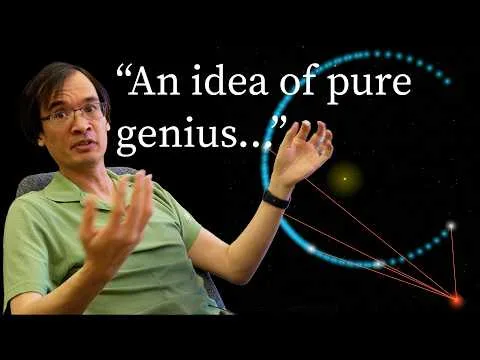
Terence Tao on the cosmic distance ladder — video thumbnail

Terence Tao on the cosmic distance ladder

Key Takeaways
  • The video explores the "Cosmic Distance Ladder," a series of methods used to measure distances to celestial objects, starting with Earth and extending to distant galaxies.
  • The shape of the Earth was first proven to be spherical through observations of lunar eclipses, where Earth's shadow on the moon is consistently circular.
  • Eratosthenes calculated the Earth's circumference by comparing the angle of the sun's rays in Syene and Alexandria at noon on the summer solstice.
  • The distance to the moon was estimated using observations of lunar eclipses, comparing the duration of the moon's passage through Earth's shadow to its orbital period.
  • The relative sizes of the moon and Earth were determined by comparing how long it took for the moon to pass through Earth's shadow during an eclipse.
  • Solar eclipses revealed that the sun and moon appear to be the same size in the sky, a coincidence that allowed for early estimations of the sun's distance.
  • Aristarchus estimated the sun's distance by observing the angle between the sun and moon when the moon is half-illuminated, though his measurements were imprecise due to the difficulty of accurately measuring the angle.
  • The Copernican model, which proposed planets orbit the sun, was initially met with skepticism partly because it didn't align with observations of stellar parallax (the apparent shift in star positions due to Earth's movement).
  • Johannes Kepler, using Tycho Brahe's detailed astronomical data, was able to deduce that planetary orbits are not circular but elliptical, a significant departure from previous models.
  • Kepler's Laws of Planetary Motion, derived from this data, provided a more accurate description of the solar system and laid the groundwork for future astronomical measurements.
🔊 Audio

Text-to-Speech

Dont even read — turn any summary into natural-sounding audio and listen while you browse.

⏱️ Navigate

Clickable Timestamps

Jump straight to the key moments in the video.
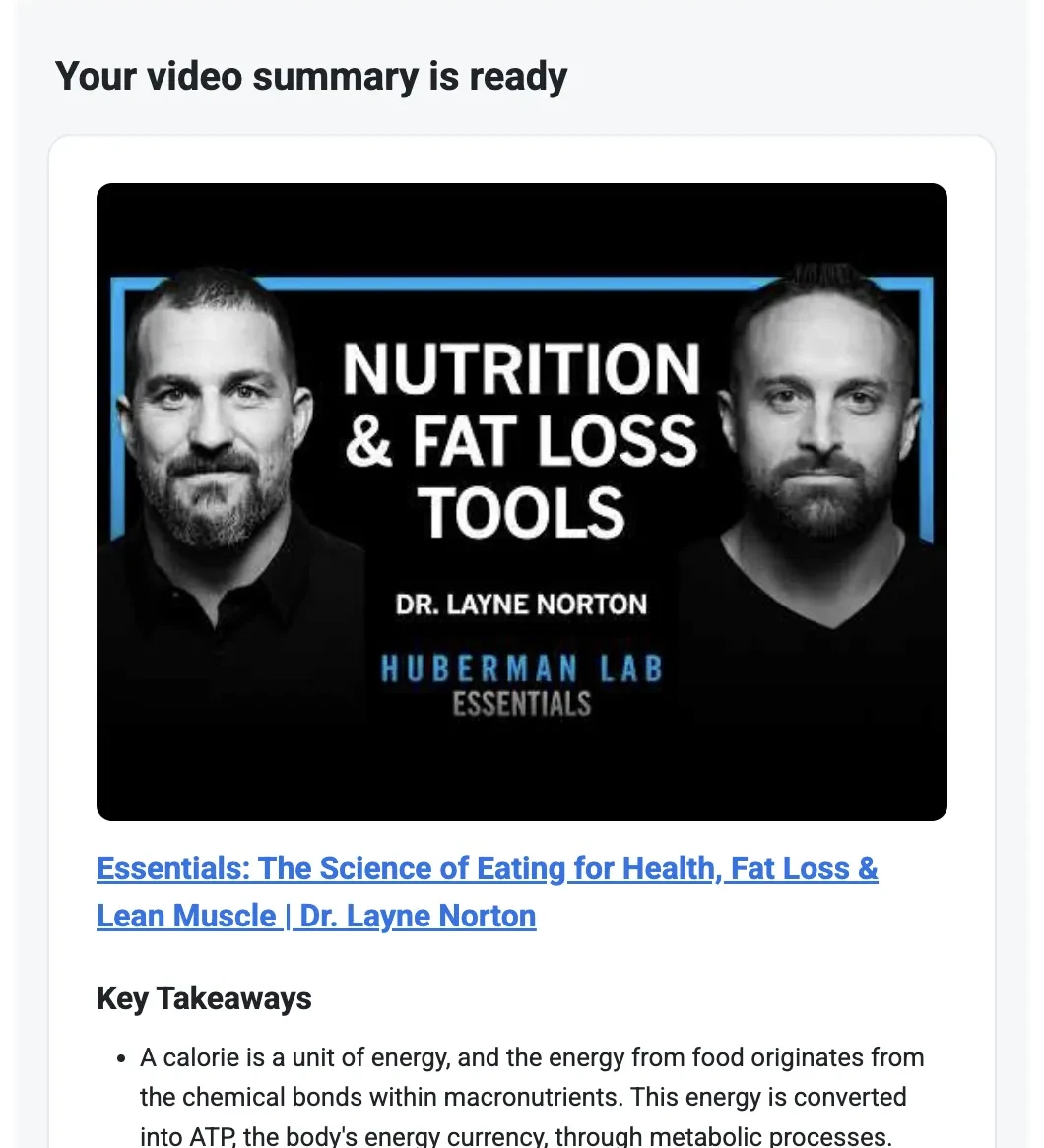
Email delivery settings
✉️ Inbox

Email Delivery

Send summaries to your inbox — per video or daily/weekly digest.

Save & Organize
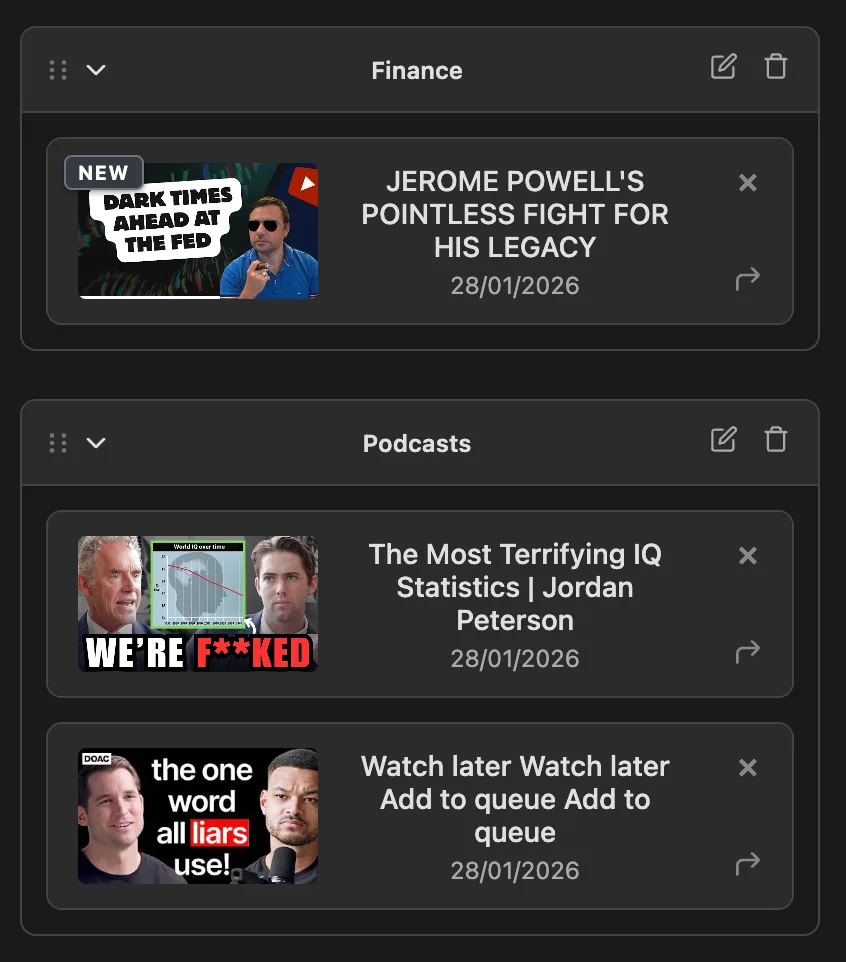
Keep every useful summary where you can find it from anywhere in your browser

Zloth saves your work into a synced customizable folder library with Markdown-enabled output.
Folder organization
📂 Organize

Folders

Organize summaries in custom folders — drag and drop to reorganize.

🔄 Cloud

Sync

Sign in with Google, and your entire library stays in sync automatically.

📋 Export

Markdown Enabled

Summaries are formatted for clean reading, copying, and reuse in notes, docs, or knowledge bases.
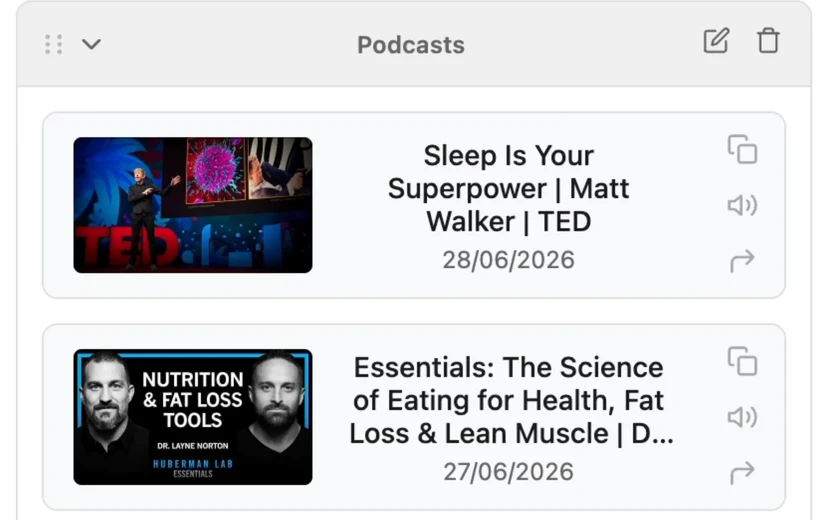
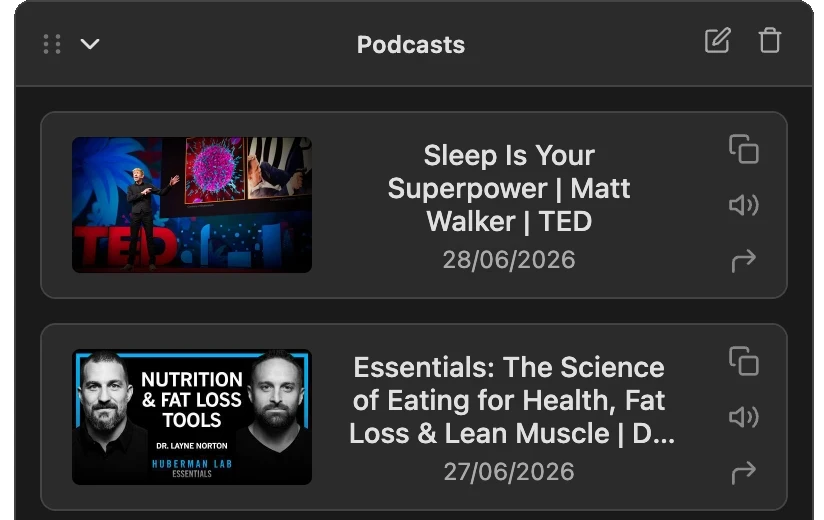
Summary library in light mode Summary library in dark mode
☀️ Theme

Light & Dark Mode

Switch between light and dark mode to match your preference or environment.

See it in action

A quick walkthrough of Zloth on YouTube.

Pricing

Save $22/yr

Free

$0
  • • 120 credits per month
  • • Clickable timestamps
  • • Listen to summaries (text-to-speech)
  • • Built-in prompts
  • • Quick Prompts: one-off custom prompts
Add to Chrome

Pro

Best Value
$4.15 /month

$49.80 billed annually · save $22/year

✨ 7-day free trial · cancel anytime

  • • 1500 credits per month
  • • 50 minutes of Pro AI TTS per month
  • • Everything in Free
  • • Priority summary processing
  • • Any video length
  • • Reusable saved custom prompts
  • • Automatic email delivery
Need more credits? Top up 1,000 credits for $4.99 · valid for 12 months

1 credit = 1 minute of video summary

Not satisfied? We will return your money.

Why Zloth?

Most YouTube summarizers make you jump through hoops. Zloth works where you already are.

Open the video, find the extension button

Click "Summarize" right on the thumbnail
Summary disappears when you close the tab

Every summary is saved and organized in folders
Copy the URL, paste it into another tool

Built directly into YouTube

Comparing options? See how Zloth stacks up in the best YouTube summarizer guide.

Frequently Asked Questions

Yes, there is a free version with 120 summary credits per month and a 7 day Pro trial.

Pro is $5.99/month or $49.80/year. The yearly plan is equivalent to $4.15/month and saves about $22/year.

You can buy a one-time pack of 1000 summary credits for $4.99, valid for 12 months. Credit packs do not include Pro AI TTS minutes.

Yes, you have to use the extension with the same Google account that you use for YouTube.

1 credit = 1 minute of video summary, regardless of the prompt type. Pro includes 1500 summary credits and 50 minutes of Pro AI TTS per month.

Yes, free and subscriptions credits expire after one month. Credits from the Credit Pack expire after one year. Subscription credits are always consumed first.

Yes, currently there is a 1000 character limit for your custom prompt. This limit might be increased in the future.

The built-in Summary and Analysis modes use English. Your custom prompt can be written in any language and the AI will usually answer in it.

Google's Gemini AI.

Yes, You can cancel any time in the billing portal. Login on the website and click "Manage subscription", or use "Manage subscription" from the extension's settings.

No, currently the extension is only available on Google Chrome. I hope to bring this extension to other browsers in the future.

You can always reach out to us by filling out the contact formular or sending an email to support@zlothai.com.

Still comparing tools? Read the best YouTube summarizer guide for a side-by-side look at Zloth, Eightify, Glasp, and NoteGPT.